
Blog
Pasteurized Or Unpasteurized- Which Is Best?
At Shisler’s Cheese House, we home a number of cheeses soft, hard, blue- you name it. These cheeses are either made with pasteurized or unpasteurized milk, it usually comes down to the cheesemakers choice, however, some regulations restrict cheesemakers, for example, Stilton has to be made with pasteurized milk and Comte, which has been subject to many controversies, has to be made using unpasteurized milk.
The biggest wonders that come up when discussing the two kinds of milk are first, is pasteurized milk safer than unpasteurized milk? Secondly, does cheese being made with unpasteurized milk taste better?
The most important subject to discuss is obviously if pasteurized milk is safer. It is not an easily answered question, you need to look at the risks and safety concerns surrounding unpasteurized milk, first.
It is common that cheesemaking rooms will contain lots of different bacteria, mainly good bacteria, but then there are quite a few bad bacterias. Some of the bad bacterias that may be present can contaminate milk or cheese with E-coli, Salmonella, and Listeria. However, there are ways to keep these under control and minimize the risks. Some of these ways are actually part of the cheesemaking processes, such as salt dehydrates, these help a lot because a lot of bacteria requires moisture to thrive. Other processes include appropriate procedures during the handling of the milk, the cheesemaking and the maturing of the cheese, shipping, and packaging.
What Is Pasteurisation?

Pasteurization is the process of heating the milk to around 160 degrees Fahrenheit for 15-25 seconds. This is to kill the pathogens which were mentioned above, not only that, but it kills pretty much everything else, which can be bad as some are important in cheesemaking as they act as a natural defense which comes from the milk. This process also allows for more errors as cheesemakers can become complacent which increases contamination risks. However, that being said, all cheesemakers that Shisler’s Cheese House works with, are never complacent and work to a high and safe standard at all times.
The main thing we believe is that with the safe and controlled handling of milk and cheese, whether it is pasteurized or not, the outcome will be the cheese that is safe to eat, with no significant risks either way.
Does Unpasteurised Milk Taste Better?

This question is equally as challenging as the previous one. Tying it back into how the process of pasteurization kills all bacteria, good and bad, a lot of friendly cultures essential for tasty cheese are destroyed and therefore they have to be reintroduced back into the milk after pasteurization. However, this still doesn’t help because the microflora is damaged and not passed onto the cheese no matter what. This poses a potential drawback in using pasteurized milk. That being said, it’s not justifiable to just say that unpasteurized milk is better, it is indeed a big factor for great cheese which has the potential to make better cheese. Then again, there are many amazing pasteurized milk kinds of cheese because of the skill of the cheesemaker.
In conclusion, cheeses which are made with unpasteurized milk are equally as safe to eat as those made with pasteurized milk and cheese which is made with unpasteurized milk has potential to taste better but that is just one of the factors that go towards the overall quality of cheese.
Get Cheesy This Fourth Of July!
With the 4th of July being a huge milestone in our country’s history, it is a day where families and friends get together and celebrate it at parades, cookouts, parties- you name it! And the biggest things that center these celebrations are food, alcohol, and fireworks (in no particular order!)

Now, focusing on the food aspect which I’m sure we are all most excited for, let’s take a look at one particular dish which is not only patriotic but also a cheesy delight. Here is a delicious cheese dip that you can make ahead of time so you only have to warm it up before the festivities.
The best cheese found for this delicious dip has got to be our White Cheddar at Shisler’s Cheese House. With its sharp flavor, it really pairs well with the sweet Vidalia onions which are also used in this recipe.
This cheese is so high quality and has such a creamy texture and flavor that it makes it perfect for this recipe as it focuses mainly around the cheese. Not only that but it is a great melting cheese, as discussed in some of our other articles, the type of cheese you melt is important, as not all melt the same or at all. You might know already about how good white cheddar is for melting with it being the season for grilling!
To impress even more at your event, you can keep it festive by making your own tortilla chips to go with the dip. It is very easy, all you have to do is take some flour tortillas and a star cutter and go nuts! You bake for a few minutes on 350 or until they begin to become golden.
Be warned, these are addictive so you might want to make a lot! Enjoy!
Recipe For Cheese Dip

What You Need
1-1/2 cups Cracker Barrel Vermont White Cheddar Cheese, shredded
1/3 cup mayonnaise
3 ounces cream cheese, softened
1/3 cup diced Vidalia onion
1/2 teaspoon pepper
1/4 teaspoon herbs de Provence
1/4 teaspoon creole seasoning
What To Do
1. Mix all ingredients fully and place in a baking dish.
2. Bake for 25-30 minutes at 375 degrees or until golden.
How The Aging Process Works
As they say in the real world, age doesn’t matter. However, in the cheese world, it truly does matter. Aging, otherwise called ripening is one of the most important parts when producing cheese. When we set cheeses to mature in controlled environments, they begin to develop their unique textures, appearances, aromas, and flavors. For example, when Swiss cheese ages, holes begin to form and it firms up.
Timing

The scientific processes of when cheese ages are as followed: the enzymes and microbes develop inside the cheese and breaks down milk fat and proteins into a complex mix of amino and fatty acids. In simpler terms, aging basically transforms the texture of the cheese and intensifies the flavor.
For most cheeses, the aging period usually requires two weeks to two years in order to develop their unique attributes. When cheese ages it generally gets a lot more firm and distinctive in flavor and aroma. When aged for 24+ months, Parmigiano Reggiano becomes a lot more complex, developing a fruity taste alongside a gritty, firm texture. Not every cheese is aged though, mild cheese like cream cheese, cottage cheese and ricotta aren’t aged at all and are consumed when fresh.
Temperature

Temperature is very important when it comes to aging. Cheese is stored in cellar or cave type environments which have a closely monitored temperature and humidity. Not all environments are the same though, it all depends on what type of cheese is being made. When it comes to aging, soft cheeses, cooler temperatures are used and the process takes a lot longer because you must age soft cheeses slower to avoid bacteria, in a result of high moisture. If you want to age firm cheeses, high temperatures are used to get rid of excess moisture.
For general aging, the temperatures of the environments that aging takes place in a range between 10 degrees C to 15 degrees C. High moisture conditions are pretty normal, along with at least 80% humidity upwards.
Aging Techniques
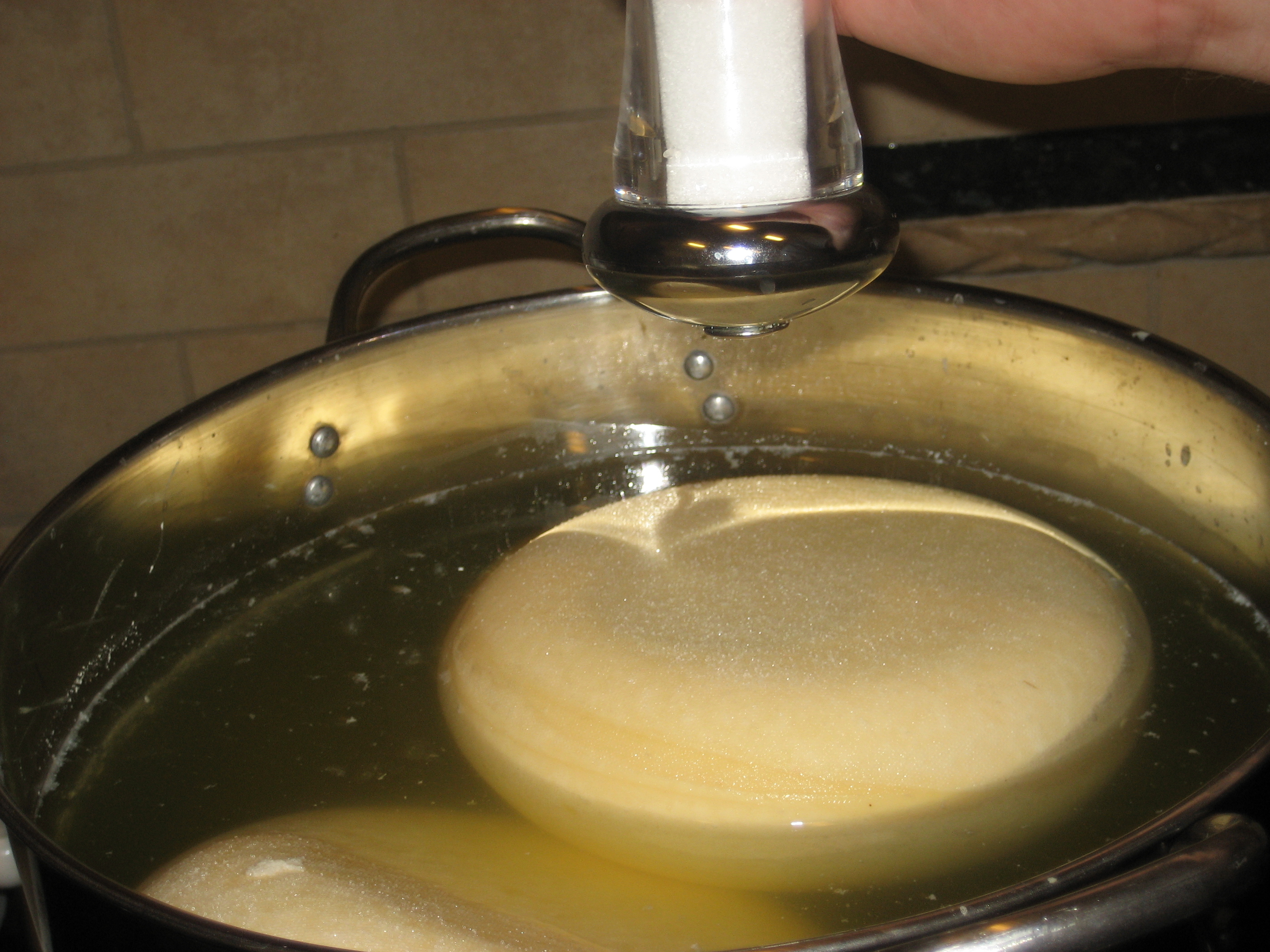
Like many things, there are different ways to age cheese. Lots of different techniques are used to make many of the amazing cheeses we love. There are two main techniques which are called surface ripening and interior ripening.
For surface ripening, the aging begins on the outside of the cheese and progresses towards the inside. To encourage the growth of rind, microorganisms are rubbed onto the outer surface of the cheese. Brie, Munster, Morbier are an example of surface ripened cheeses which are also washed in a saltwater brine during the process. Sometimes, the brine is seasoned with wine and spices which carry flavor into the cheese and nurtures bacterial growth.
When it comes to interior-ripened cheeses, it is opposite to surface ripening and begins from the inside of the cheese and moves outward. The cheese is coated with wax to prevent further oxygen action on the surface, once it is done aging. Examples of an interior- ripened cheeses are Cheddar and Swiss.
For interior-ripened blue cheeses such as Gorgonzola, Stilton, and Roquefort, they contain additional bacteria and molds introduced to them during an aging period. Sometimes, the Penicillium molds are injected into the curd whereas other times, the microbes are already present in the air and grow within the aging cheese. For these molds, they grow into small fissures within the cheese, creating the famous blue-green veins and sharp flavor throughout the cheese.
Have You Tried These Imported Cheeses?
Although importing cheeses is not exactly the greatest thing for the environment, it is great having so many amazing choices. Importing and exporting opens up new worlds, new realities for all of us cheese lovers. Even then, with so much choice, we can sometimes stick to the safe options and what we know; with this, we should definitely experiment and broaden our horizons.
Here are some of the best imported cheese with great variety at the same time:
Italian

Fontina
Although other countries produce their own version of this cheese, Italy’s version is definitely one of a kind, identified by its stamp. This semi-soft cow’s milk cheese has a rind that forms naturally because of the aging process, the interior color is yellow or orange-brown. The texture is different depending on the age. When it is younger, the cheese is a lot more flexible and melts well, so it is ideal for fondues or casserole dishes. When the cheese is matured, it is firmer and grates well.
Caciocavallo
This is a semi-hard cheese which is made from either cow’s or more interestingly- ewes milk. The process which is used when producing this cheese involves spinning the crafted cheese strings into pear shapes that are then cured in brine or salt for a couple days. The string is then tied around the neck to create a separate ball above the main boy of cheese. It is then aged by being hung over poles.
Spanish

Valdeon
This blue cheese is made from goat’s and cow’s milk. It comes from the Picos de Europa mountain range, being mature in limestone caves, traditionally, for at least 2 months. The flavor is tangy and earns its place on a cheeseboard or fits perfect in recipes which need blue cheese.
The Drunken Goat
I know what you’re thinking, what a strange name! However, despite all the things a drunken goat could mean, this is a goat’s milk cheese from the Spanish Mediterranean coast. This cheese has a purple rind and gets the ‘drunken’ from the fact that it is cured in red wine. See, it wasn’t what you thought and is delicious in every way!
French

Boulette d’Avesnes
From the village of Avesnes near the Belgian border, this iconic cheese is shaped into conical parcels. It is a case of the notion that if you don’t mind a very stinky cheese with a strong, spicy taste, then you will enjoy it! It is produced from the damaged whey of curds that is then mashed with spices and herbs. It is then washed every week in beer and matured for around 4 months.
Banon
Like many kinds of cheese, Banon is named after the village of origin. It was first produced in 1270 and is made from cow’s milk with a strong woody flavor to it. The texture is soft with earthy aromas. When being produced, the cheese is molded by hand before the maturing process begins. After the maturing stage, the cheese is then wrapped in dried chestnut leaves to continue maturing for a further 2 weeks.
If this delicious list isn’t enough for you to try, here are a few more options!
– Delft Blue- Holland
– Trappistenkase- Germany
– Tete de Moine- Switzerland
– Bergkase- Austria
Delicious Belgian Cheese
Belgium is not only famous for its rich chocolate but its fabulous cheese as well. Although Belgium is a small country, it makes over 300 different varieties of cheese, almost the same amount as France! The reason Belgium cheeses aren’t as well known as other European countries is that they produce very small amounts of the cheese and very rarely export them out of the country.
You could say that the cheese in Belgium are exclusive and if you are lucky enough to be able to visit Belgium or your local cheese store has a few samples, here is a list of the best cheeses Belgium has to offer:
Herve

The name of this cheese comes directly from the town in which it is made. Herve is one of the most popular cheeses of Belgium, is made from cow’s milk cheese, it comes in the shape of a brick with a reddish brown coating which is formed by bacteria during the aging period. Quite often, Herve is described as similar to Limburger as it has a pale yellow, soft interior and a strong smell to it. The cheese is quite sweet when it is young but as it ages, the flavor deepens, becoming quite spicy. A good pairing would be beers and dark bread.
Beauvoorde

The style of this cheese is quite traditional despite it being newer to the Belgium cheese market. This creamy cheese was made by an innkeeper in from Beauvoorde Village, in the 1990s. It is a semi-hard cheese made from cow’s milk with a hexagonal shape and a natural gray rind around it. The flavors are mild with a spicy aroma. It will make good for a cheese plate or a simple sandwich cheese.
Limburger

Even though Limburger is readily made and available in the United States, this stinky, legendary cheese actually comes from Belgium originally. This pungent cheese is made from cow’s milk and has a soft, yellow interior. Despite having notes of sweetness, Limburger is quite meaty and spicy. On the outside, the texture is smooth and sticky, ranging in color from reddish-brown to yellow, it also has corrugated ridges. Although Limburger is an acquired taste, it is definitely a must try as the full flavor might definitely win you over.
Brusselse Kaas


This soft cow’s milk cheese is also known as Fromage de Bruxelles. The creation of this cheese is somewhat unique, with it being repeatedly washed and dried during the maturation period of 3 months. In result of this, it has a very smooth texture with a sharp flavor. The shape is often round because of the tubs the cheese is placed in. It can be a great snacking cheese or good for spreading on bread.
Rubens

There is no better way to honor a famous artist than to name a delicious cheese after them. That artist is the Flemish painter Peter Paul Rubens, the most popular painter in 17th century Europe. The cheese is made into small rounds with a reddish brown rind encasing it.
Passendale

The name of this cheese comes from the village of Passchendaele. It is a semi-soft cow’s milk cheese which resembles a load of bread with a hard, edible brown rind. One of Belgium’s best-known cheeses, the texture is smooth and fresh with dotted holes in the interior with a mild flavor.
Maredsous

This soft cow’s milk cheese is traditionally made by monks, originating from the Maredsous Abbey in Belgium. Being served as a table cheese frequently, the loaf shaped cheese has a bright orange color which is washed with brine and lightly pressed.
Prince-Jean

Prince-Jean is a fresh cow’s milk cheese which is made in modern creameries. This rich, triple cream cheese is divine in all its velvety pleasure. The aroma is pungent with a white mold surface. Another version of the cheese is also made with peppercorns, it is much softer.
Central American Medical Outreach (CAMO): A Humanitarian Organization that Sees the “Big Picture”

At Shisler’s Cheese House, giving back to the community has always been important to us. We always remember that we came from humble beginnings ourselves. But we are always cautious about who we donate our time and money to. We have seen high profile national “charities” that direct more of their donation revenues to “administrative costs” like salaries and travel, than to actual operations and aid. We began looking at CAMO because it was founded by a member of our local community who also happens to be a customer. It passed our initial scrutiny when we saw how efficiently the U.S. operations were run and the volunteer labor was utilized. But NOTHING demonstrated how much CAMO improves the lives of a disadvantaged people like witnessing its operations in Honduras. Following are brief descriptions of CAMO’s ongoing operations in Honduras:
Medical Facilities
Anyone familiar with CAMO most likely knows the story of founder Kathryn Tschiegg having lost 31 infants in one month as a result of not having the supplies, equipment and educated staff to save them. As a Peace Corps volunteer nurse in 1979-1980, she found the conditions of the Hospital de Occidente, the largest public hospital in western Honduras, to be unconscionable. So she left a successful career as an RN to do something about it. The easiest and most frequently taken approach in this situation is to “fix” what WE perceive is broken. But that often yields temporary and semi-successful results. So she, and the many team members who have joined her over the years have taken a more holistic approach.
The hospital, of course, is in much better condition, and has much better access to needed supplies and equipment. But even more impressive is how the overall health in the region has improved due to much better access to preventive services. CAMO, with the help of several local businesses, rebuilt the medical center in Santa Rosa de Copan, which was previously a dimly lit, poorly staffed, dilapidated old building. Residents of the Santa Rosa and the surrounding area now have access to much-needed vaccines, routine exams, pre-natal care, cancer screening, X-Rays, dermatology, many surgical procedures, and even often neglected areas like Ophthalmology and Dentistry. People with disabilities also now have access to assistive devices like hearing aids, prosthetic limbs, and wheelchairs. Besides what’s available in Santa Rosa, CAMO also helps to equip and supply many facilities in the surrounding area, as well as send staff and volunteers out into other communities. All of this has helped to greatly improve the lives of the people of Western Honduras. But CAMO didn’t stop there…..
-

- Patient Waiting Area

-

- Doctor’s Station

-

- Surgery Recovery Area

-

- Pediatrics

-

- OLYMPUS DIGITAL CAMERA

-

- OLYMPUS DIGITAL CAMERA

-

- Prostheses Lab

-

- Prostheses Lab

-

- Dental Center

-

- Audiology

-

- Pathology Lab

-

- Ambulance

-

- Health Clinic

-

- Cervical Cancer Screening

-

- Donors for Health Clinic

Battered Women’s Shelter
Another cause we are passionate about here at Shisler’s is preventing spousal abuse, and helping the victims (as was a family member of ours), get back on their feet. Domestic abuse is a HUGE problem in Honduras, that often goes unchallenged, and many of the victims end up being murdered. Yet, victims of domestic abuse often find they have nowhere to turn in places like Honduras, as few safe places exist to seek shelter from an abusive spouse, and economic support is even harder to come by. CAMO built the first domestic violence shelter in Western Honduras in 2010 with 24/7 protective services, therapy, medical services, and job skills training to enable the victims to support themselves and their children.
-

- Casa Hogar Courtyard

-

- Room for residents

-

- Common Bathroom

-

- Child Care

-

- On-site Psychologist

-

- Sponsor Plaque

Daycare Center
This daycare center is an ideal example of CAMO’s holistic approach to permanently resolving problems rather than just treating the symptoms. Honduras does not have government sponsored programs like Head-start. Most impoverished families, and especially single mothers, cannot afford to have anyone care for their children while they try to support their families. Young children are often left alone or brought to work with the parent when that is practical. CAMO helps to sponsor a daycare for children ages 2-6. They recently sponsored some repairs to a leaky roof in the toddler section, and replaced the old and crumbling ceiling. CAMO also provides a certified kindergarten teacher for children old enough to attend.
-

- Toddler Area

-

- Daycare Center

Preventing “Idle Hands”
“Idle hands are the devil’s workshop”. – Proverb
Approximately 60% of the population of Honduras is under the age of 25. With proper training and opportunity, these young people can develop into a great workforce that can provide long-term growth for the economy. OR, they can be left to their own ends, and most likely become criminals. We believe that the next few projects are the best examples to demonstrate CAMO’s vision for sustained development in Western Honduras.
Cultural Center
CAMO assisted in building a cultural center from an abandoned water cistern in 2007. Unfortunately, we were unable to tour the cultural center due to scheduling conflicts. But it’s a place for children and adolescents to explore programs like playing musical instruments, radio broadcast, and other artistic pursuits.
Sports Complex
This beautiful sports complex was built to give children and adolescents a place to go for healthy entertainment, and to maintain physical fitness. In addition to spaces for organized athletics like volleyball, soccer, and basketball, this sports complex offers a cardio and weight gym outfitted mostly with donated equipment. According to José Bautista, Executive Director of CAMO Honduras, the gym has also served to improve the health of the women of Santa Rosa de Copan, who did not have the habit of physical fitness prior to the gym opening.
-

- Basketball Court

-

- Soccer Field

-

- Gym

Trade School
The trade school, in our opinion, is the “icing on the cake” when it comes to CAMO’s long-term vision for improving the lives of the people of western Honduras. Again, 60% of the population of Honduras is under the age of 25. Teaching young adults valuable trades is probably the most certain way to reduce the crime rate and improve the overall economy in the region. Here, the young adults are able to learn skills, like carpentry, electricity, welding, masonry, culinary arts, textile production, computer skills, and several others. There is even a short program to train Coffee Baristas, which seems appropriate in an area with such high coffee production.
-

- Trade School

-

- Future Barista

-

- Electrician Training

-

- Carpentry

-

- Culinary Arts

-

- Culinary Arts

-

- CAMO Sponsored Expansion

-

- Made with Love

-

- Tropical Wood

-

- CAMO Sponsored expansion

Overall, we were EXTREMELY impressed with all that CAMO has accomplished. We would like to sincerely thank José Bautista, Anabel Gonzales, Heidi Hernandez, and the rest of the team at CAMO Honduras who took the time to give us a tour of all of CAMO’s projects in Santa Rosa de Copàn. Again, at Shisler’s Cheese House, charitable giving is an important part of our business model. But we carefully scrutinize who we donate our time and money to; as we want to make sure it is used properly and makes an impact. CAMO has passed all of our scrutiny with flying colors, and has gone beyond our expectations when it comes to using its resources efficiently, and taking a holistic approach to improving the lives of the community it helps. We will continue to be proud donors and volunteers for CAMO, and highly recommend them to anyone who is looking for a cause to support. For more information, visit www.camo.org .
Cheese And Tequila- A Match Made In Heaven?
Definitely not what you expected, right? You’re most likely thinking that only wine or beer are good to pair with cheese, but that is not true. Although there isn’t a big history of cheese and tequila being paired together, delicious notes of your favorite tequilas, from caramel sweet to floral, actually do make a perfect pairing to some of your favorite cheese.

Casa Noble Single Barrel Extra Anejo- Stichelton
For 7 generations French White Oak barrels have been used to create and age tequila and there is no difference here with this tequila. The most evident notes are chocolate, hazelnut, and vanilla. Those mouthwatering flavors make it a wonderful match for a rich cheese like Stichelton which is strong with smooth cocoa notes.
Casa Noble Reposado- Bianco Sardo
Reposado is a full bodied, smooth tequila after being aged in a French White Oak barrel for a whole year. The impact of the oak results in a smokey flavor with hints of wildflowers and vanilla. Bianco Sardo is a much tangier, sweeter version of Parmigiano Reggiano and is an ideal match to Reposado, with sweet aroma and vanilla tastes, it will enjoy the oakiness of the tequila.
Casa Noble Crystal- Camembert
If you love a crisp, clean array of agave flavors, Crystal is the perfect Blanco tequila. Within, there are buttery notes of honey, lime, and citrus. This tequila is well balanced and matches Camembert’s toasty, lactic notes. The cheese even balances out the sweet honey notes and pairs well with the citrus kick of the tequila.
Casa Noble Anejo- Annelies
This tequila is aged in the French White Oak barrels for over two years and a result of this is the Anejo develops a complex mixture of piquant spices and dried fruits. The flavors of this tequila such as the oakiness, vanilla, and butterscotch are what leaves a lasting taste in your mouth, which makes it ideal to go with the tasty Annelies cheese. The cheese boasts a mix of butterscotch and toastiness, with a unique cocoa flavor that stands out against the complex tequila.
Now you see all these wonderful combinations, it will be great to try them, especially in this hot summer heat! There’s nothing like a nice glass of tequila with a mouthwatering slice of cheese, that is for sure! As always, experimentation is key!
Melting Cheese- How Does It Work?
Everyone loves hot, gooey, cheesy heaven- be it America’s favorite grilled cheese, the melty delight which is fondue or even just that sprinkle of cheese you melt over your favorite casserole. Along the way, you may have tried different cheeses and enjoyed their different textures and delicious flavors, but you also may have noticed that some of those delightful cheeses don’t turn smooth and melty like others. Now just because they don’t melt very well, doesn’t mean we love them any less, they are just better for other uses. You might have wondered why your cheese doesn’t melt very well and what to look for in cheese to know whether it melts or not so here is some information to help you along the way.

The most important thing you need to know when it comes to melting cheese is that melting is all to do with the fat. The ratio between the water and the fat in the cheese is really what determines how well the cheese is going to melt. So with that, a cheese which is higher in moisture is usually a lot better to melt than a drier one. The reason for this is because of the structure of the protein. The protein keeps the fat and water separated and it is looser in high moisture cheeses as opposed to dry ones which are a lot more rigid.

So, with this knowledge, when heat is applied to most cheeses, the fat globules go from solid to liquid which is when the cheese starts becoming that yummy, gooey consistency. When it comes to the protein, the structure loosens under the heat and again, the consistency becomes very loose and thick. It really depends on the cheese how the liquid goes, it could be very sticky or be very liquidy and drip like fondue.

This is also why age is important when it comes to cheese. For fresh cheese, they don’t have a maturity level which makes their proteins very tightly wound up. When they age a little, the proteins begin to loosen up, creating a more open matrix. This matrix is flexible which helps with melting the cheese to smooth consistency without the matrix breaking. However, problems do arise when the cheese ages too much, it makes the proteins tighten up into clumps, which is why crispy cheese happens.

So, the best melters are a combination of moisture and age. Examples of cheeses with the desired qualities are Gruyere, Emmentaler, and Comte, these cheeses have flexible proteins and are aged well. The fact that they have high moisture helps the proteins separate without breaking them entirely, meaning they become the stringy, oozing melted cheese we love so dearly. I bet it makes your mouth water just thinking about it.
Dictionary Of Cheese
When it comes to forming your cheese plate, it is always advised to have a lot of variety. In terms of variety, it can mean many things- different flavors, textures and different milk types. In many circumstances, opposites attract, especially in cheese. Opposite flavors often complement each other. The best way to form your plate is just to experiment with different cheeses, you cannot go wrong.
You may be struggling to find inspiration for what cheeses to try for your plate so here is a dictionary list of some delicious cheeses to guide you along your way and ignite your senses like never before.

Adelegger
This cheese is made from raw cow’s milk and is originally produced in the Bavarian Alps. The flavor is nutty and savory with a hint of beef broth. This is definitely not and ordinary cheese and has a texture which is quite gritty.
Bijou
This goat’s milk cheese has a creamy texture. It comes from Vermont Creamery and has a strong tangy flavor. Bijou is often sold in pairs and is packed in certain packaging to ensure it keeps on aging even after leaving the creamery.
Clothbound Cheddar
Clothbound Cheddar is a crumbly cheese which dates back many years is definitely becoming more popular.With a sharp citrus flavor, there is no doubt that this cheese is a delicious winner.
Dorset
Rich in flavor, Dorset is a raw cow’s milk cheese which once produced, is washed in brine and aged until it is semi-firm.
Époisses
This cheese is extremely popular, being produced originally in Burgundy, France. This stinky delight is so creamy because it is washed in brandy. The meaty, salty flavors are really what makes this cheese unique.
Fontina Val d’Aosta
This creamy, buttery delight made from cow’s milk dates back to the middle ages and comes from the Italy Aosta Valley. Similar to many other Alpine kinds of cheese, it smells quite like grass even though its flavor is quite briny.
Grayson
If you’re a fan of breakfast foods like bacon and eggs, this is definitely the cheese for you. Grayson is a raw cow’s milk cheese which has meaty flavors and is made from a yellow paste similar to egg yolk. This cheese comes from Meadow Creek Dairy in Virginia.
Harbison
You won’t need a cheese knife for this one, more like a spoon. Wrapped in bark for a unique touch, this sweet cheese boasts delicious citrus and savory flavors. As for the texture, soft and creamy enough to spread, you won’t be disappointed.
Idiazabal
This cheese has an interesting background. A shepherd produced this cheese in a cabin in Spain a century ago. Made from sheep’s milk, the production method is like no other. Cheese wheels in the rafters would drink up smoke creating a rustic smokiness that will make your mouth water.
Juvindale
From New York’s Meadowood Farms, Juvindale is a smooth paste which is washed in local Riesling. Its flavors are very crème Fraiche like with tangy notes cutting through the meaty, fruity flavors. Juvindale is a fairly new cheese but tasty nonetheless.
Kunik
If you are looking for a rich, buttery cheese, Kunik is definitely the way to go. Made from goat’s and cow’s milk cream, enjoy this creamy cheese with salty notes.
Leonora
Originating from Spain, this gamy goat’s milk cheese has a dense texture to it. It is quite close and compact towards the center and a lot creamier towards the rind with flavors of pepper running through it.
Manchego
Another iconic Spanish cheese is Manchego. It is made from sheep’s milk and is a hard, aged cheese with flavors of toasted almond and roast mutton which will definitely keep you coming back for more!
Nuvola Di Pecora
The name of this cheese actually translates to “Sheep Cloud”, which will come no surprise to find that it is made from Sheep’s milk. It is an earthy, rich cheese with a spectacular neon-yellow color with gray mold. Not only is it deliciously rich, it is a rare style overall of cheese which is available in the U.S.
Ossau Iraty
Firm and buttery like a biscuit, this raw sheep’s milk cheese are from the Pyrenees of Southern France. The flavor is caramelized and nutty with subtle notes of tropical fruit and mint within the sweetness.
Parmigiano Reggiano
When it comes to cheese, why settle for anything less than a high quality, delicious, raw cow’s milk Parmigiano? The best way to make sure of quality is a reliable producer. For many generations, the Cravero family has crafted expert, high-quality wheels of grassy, nutty, mouth-watering cheese.
Quadrello Di Bufala
Leave behind your regular mozzarella and open up to the world of possibilities that comes along with Quadrello Di Bufala. Made from rich water buffalo milk, this cheese is brine-washed and tastes sweet and minerally.
Roquefort
One of the magnificent blue cheeses, Roquefort is rich with sheep’s milk, being produced in France it lays a silken foundation for pockets of mold full of spicy, fruity flavors.
Selles-Sur-Cher
From the Loire Valley, this goat’s milk cheese has ashed rind and a dense paste which is ripe with hazelnut and almond flavors. With intense mineral flavors, it may remind you of pennies or rocks you may have ‘accidentally’ tasted as a child.
Truffle Tremor
This is one of the finest truffle cheeses you can find. Made in Cypress Grove Chevre, the Italian black truffles are folded into a fluffy goat’s milk paste of Truffle Tremor. It is very mushroom like with earthy and tangy notes.
Up In Smoke
From Oregon’s River’s Edge Chevre lies the very foundation of a fresh goat’s cheese which is smoked and spritzed in Bourbon, maple leaves and then smoked completely. The result of this comes to a chevre whose intense smokiness is accompanied by tangy, lemony notes.
Valencay
With a unique pyramid shape which has seemingly lost its top comes an ashed goat’s milk cheese which is from the Loire Valley. It is very moist with and earthy freshness to it. It’s similar to the smell of your hands when you’ve been gardening all day.
Wilde Weide Gouda
Coming from a Dutch farmhouse, this flaky Gouda certainly exceeds expectations with its buttery and nutty, whiskey caramel flavors. The name of this cheese itself translates to “wild meadow” which makes sense because of the cows that graze all day in the meadows to provide the organic milk for this particular cheese.
X Murray’s Project X
With a collaboration between Vermont’s Spring Brook Farm and Manhattan mega-monger, Murray’s Cheese is quite a firm raw cow’s milk tomme which is crusted in fennel pollen and washed in Riesling.
Yarg
Yarg is a crumbly cheese made from cow’s milk. It is wrapped in nettle leaves from Lynher Dairies in West Cornwall, England. Lacy mold then develops on the leaves while the cheese ages, which in turn gives a mushroomy quality along with the citrusy notes of this firm cheese.
Zimbro
Zimbro is a signature cheese of Portugal. It is quite like pudding and is made from sheep’s milk. The cheese is quite sour and can most definitely be eaten with a spoon. Along with its unique name, it is also quite rustic and elegant. The aroma is very herbal and the flavors resemble Amaro. It is best to eat this cheese as a group as it is only sold as a whole.
Luscious Truffles
What is more delicious than truffles? Goat’s cheese truffles! Although it is a unique idea, cheese truffles are a match made in heaven! The possibilities with cheese are endless because of all the unique varieties and flavors available on today’s market, it’s best to keep trying out new things and say yes to Goat’s cheese truffles!
A lot of the time, especially when it comes to putting food together, opposites attract. Originally, when you took that first bite of a cheese truffle, it was like an explosion in your mouth. The acid of the goat’s cheese almosts fought with the truffle. This wasn’t the best outcome, so cheese pioneers kept experimenting. That is the fun thing about cheese, you can keep trying out new things until you perfect it.
Cheese makers found that inoculating the truffles and putting them in an aging room to ripen was the best step forward… and they were right. As the cheese truffles aged, the creamy texture of the ripened cheese combined with the earthy flavors of the truffles proved to be a perfect pairing.
These truffles are so good that they have actually won world cheese awards from the American Cheese Society.
The best thing about cheese truffles is the texture really goes well with the flavor which really wins someone over despite the expensive costs of production. When it comes to great, unique food, people can usually overlook the price (within reason!)
These tremendous truffles will definitely be a statement piece at dinner parties and on cheese boards. They will be the deliciously you’ve been missing!
Here is a delicious recipe to create your truffles:


